By Phillip Mitchell, Founder & Chief Brokerage Officer, AIExchange.club
Rates and SBA terms below are current as of September 2026 and move. This is general information, not financial or lending advice — talk to a lender and an accountant before committing to anything.
Every guide to buying a SaaS business teaches you to evaluate churn. Almost none of them tell you where the money comes from.

We looked at the five highest-ranking guides on buying a SaaS business. Across roughly 24,000 words, financing gets about 400 — under 2%. SBA 7(a) lending, the most common way an American individual finances a small business acquisition, appears zero times as guidance on any of them. Search funds, zero. Not one explains a debt service coverage ratio, a down payment requirement, or what a lender wants to see in a SaaS P&L.
Which is odd, because for most first-time buyers the binding constraint was never "I can't read a cohort chart." It's "I don't have $250,000."
First: the price is not the cost
The purchase price is the number in the listing. It is not the amount of money you need.
| Line | Typical, on a $250,000 deal | Notes |
|---|---|---|
| Down payment / equity injection | $13,000 – $75,000 | 10% minimum under SBA; 20–30% typical for seller financing |
| Legal — asset purchase agreement | $1,500 – $5,000 | Do not skip this |
| Diligence support | $0 – $3,000 | Technical or financial review, if you're not doing it yourself |
| Escrow | ~$3,800 | 1.5% at this size; sometimes seller-paid, so ask |
| Working capital reserve | 3 months of operating costs | The line everyone forgets |
| Transition and migration | $500 – $2,500 | New infrastructure, overlapping subscriptions, contractor time |
A buyer with exactly $50,000 who finds a $50,000 business cannot buy it. Budget the price, then budget again for everything around it.
The five ways people actually pay
| Method | Typical down | Cost of capital | Best at |
|---|---|---|---|
| All cash | 100% | Opportunity cost only | Under $75K |
| Seller financing | 20–50% | 0–8% interest | $50K – $500K |
| SBA 7(a) (US only) | 10%+ | ~7.75–10.5% variable | $150K – $5M |
| Specialist lender | Varies | Historically 15–23% | Increasingly scarce |
| Partner or SPV | Shared | Equity, not interest | Any size |
Most deals under $500,000 use some combination of the first two. The others are situational.
Seller financing: the workhorse at this size
The seller takes part of the price over time. You pay a deposit at close and the balance in instalments, usually over 12 to 36 months, sometimes with interest and sometimes without.
It's the most common structure below $500,000 for a simple reason: it needs no third party. No lender, no underwriting, no six-week approval. If the seller agrees, it's done. Put the note's amount, term and interest rate in your letter of intent so they're agreed before diligence starts.
What a seller note looks like
A $100,000 business, 30% down, remainder over three years at 6%:
| Item | Amount |
|---|---|
| Purchase price | $100,000 |
| Cash at close (30%) | $30,000 |
| Seller note | $70,000 |
| Monthly payment, 36 months @ 6% | $2,130 |
| Total interest paid | ≈ $6,660 |
So the business must throw off at least $2,130 a month before you've paid yourself anything. On a business earning $3,500 a month, that's tight but workable. On one earning $2,500, it isn't.
Why a seller would agree
Sellers accept notes for three reasons: it widens the buyer pool, it can spread their tax liability, and it often gets them a higher headline price than an all-cash offer would. That last point is your negotiating lever — a seller who wants $250,000 may take $220,000 in cash, or give you terms at the full number.
What it costs you: the seller stays in your life for two or three years, and a missed payment is a dispute with someone who knows exactly how the business works.
A seller note is a fixed amount. Some buyers offer an earnout instead, which is paid only if the business hits targets after the sale. See how earnouts work and what they actually pay.
SBA 7(a): the real numbers, and the wall you'll hit
For US buyers, an SBA 7(a) loan is the main route to buying a business bigger than your savings. The terms are genuinely good — and small SaaS deals run into a specific problem that nobody writes about.
The terms, as of September 2026
| Term | Current |
|---|---|
| Maximum loan | $5 million guaranteed portion |
| Minimum equity injection | 10% of total project cost |
| Seller note on full standby | Can cover up to 5% of the purchase price, reducing your cash |
| Term | 10 years for a business acquisition |
| Rate | Variable — WSJ Prime plus up to 3%. Roughly 7.75%–10.5% today |
| Debt service coverage | Minimum 1.25x; lenders prefer 1.50x |
| Credit score | Most lenders want 680+ personal |
| Guaranty fee | 2%–3.75% of the guaranteed portion, can be rolled into the loan |
On paper that's excellent: 10% down, ten years, single-digit interest. On a $250,000 purchase with $8,000 of closing costs, the equity injection is $25,800 — and if the seller carries a note on full standby covering 5% of the price, your actual cash requirement drops to roughly $13,300.
Now the wall
Lenders require the business to cover its own loan payments by at least 1.25x. That sounds generous until you run it on a real business.
Take that $250,000 purchase. The loan is about $232,200 over ten years. Here's what debt service coverage looks like on a business with $73,000 in SDE:
| Rate | Annual debt service | If you draw no salary | If you draw $30,000 | If you draw $50,000 |
|---|---|---|---|---|
| 7.75% | $33,440 | 2.18x ✓ | 1.29x ✓ | 0.69x ✗ |
| 9.00% | $35,297 | 2.07x ✓ | 1.22x ✗ | 0.65x ✗ |
| 10.50% | $37,598 | 1.94x ✓ | 1.14x ✗ | 0.61x ✗ |
This is the constraint nobody publishes. A $250,000 SaaS business producing $73,000 a year clears the coverage test comfortably — but only if you take nothing out of it. Draw a modest $30,000 salary and at 9% you fail. Draw a living wage and you fail badly.
Which means SBA financing for small SaaS works in three situations: you keep your day job and run the business on the side; the business earns considerably more than the loan payments; or you put more than 10% down. If you're planning to quit your job and live on a $250,000 acquisition, the maths is against you, and a lender will see that before you do.
Why SaaS is harder to underwrite than a laundromat
SBA lenders like collateral, and SaaS has none. There's no equipment, no property, nothing to seize. Everything you're buying is intangible — code, customers, a domain. Add short financial histories, revenue that lives inside a Stripe account, and customer contracts that are often month-to-month, and it's a harder file than a business with a building.
It is genuinely done, though. What makes a SaaS deal financeable:
- Two-plus years of clean, separated financials — business accounts, not personal ones with business income in them
- Revenue verifiable at source, through the payment processor rather than a spreadsheet
- Customer concentration under 20%, ideally well under
- A personal guarantee — you're signing for this either way
- A lender who has done asset-light deals before. The single biggest determinant. A generalist local bank will decline; specialist SBA lenders who work with online businesses will engage.
None of this applies outside the US. If you're elsewhere, seller financing and partner structures are where to focus.
Specialist lenders, and a warning
A handful of lenders built products specifically for acquiring online and subscription businesses. They underwrite on revenue quality rather than collateral, and they move in days rather than weeks.
Be careful with the advice you find on this, because it's dated. Boopos — the lender most commonly recommended in SaaS acquisition guides — is no longer accepting new applications. It has folded into Founderpath, and existing loans continue to be serviced while new borrowing has stopped. Guides published a year ago still list it as a live option; it isn't.
Its old terms are still a useful benchmark for the category: up to 2.5x EBITDA for SaaS, rates around 17–23%, funding in about a week, with a 2–3% prepayment penalty in year one. That's roughly double SBA pricing, which is the trade for speed and for skipping the collateral question.
If you go this route, model the payments before you sign. At 20% interest, debt service eats a substantial share of a small business's profit, and the deal has to be genuinely good to survive it.
Partners and syndicates
The least-discussed option and often the most sensible at small scale: don't buy it alone.
- An operating partner — one puts in capital, the other runs it. Works when the skills genuinely differ, fails when both wanted the same job.
- An SPV — several investors fund a single acquisition through one entity, with an operator taking a management stake. Common in the indie acquisition community.
- Seller as partner — the seller retains a minority stake instead of taking a note. Aligns them with the outcome, and useful when you want their knowledge to stick around.
The cost is control and upside. The benefit is that a $400,000 business becomes reachable with $100,000 and a credible plan — and that a first acquisition doesn't have to be a solo bet with everything you have.
Worked example: buying a $250,000 SaaS
Same business, three ways to pay for it. It earns $73,000 in SDE.
| All cash | Seller note | SBA 7(a) | |
|---|---|---|---|
| Cash at close | $250,000 | $75,000 (30%) | ≈ $13,300 |
| Plus costs and reserve | $12,500 | $12,500 | $12,500 |
| Total cash needed | $262,500 | $87,500 | $25,800 |
| Annual debt service | — | ≈ $63,900 (3 yr @ 6%) | ≈ $35,300 (10 yr @ 9%) |
| Cash flow to you, year one | $73,000 | ≈ $9,100 | ≈ $37,700 |
| Payback on your cash | 3.6 years | Slower early, then steep | Under 1 year |
Three honest observations. All cash gives the best total return and the worst risk concentration. The seller note leaves you almost nothing to live on for three years, then everything after. SBA gives the best cash-on-cash return by a distance — and is the only one that fails if the business dips, because the payment is due whether revenue arrives or not.
Leverage does not make a mediocre business good. It makes a good business faster and a bad business fatal.
What a lender actually looks at in a SaaS P&L
If you're going the SBA or specialist-lender route, these are the lines that decide the file:
- Two to three years of monthly, separated financials. Mixed personal and business accounts are the most common reason a file stalls.
- Revenue verifiable at source — processor exports, not screenshots.
- Add-backs that survive scrutiny. Aggressive add-backs inflate SDE, which inflates the coverage ratio, which the lender will recalculate anyway.
- Churn and concentration. High churn reads as a decaying asset; concentration reads as a single point of failure.
- Contract length. Annual prepaid contracts underwrite better than month-to-month.
- For AI products: gross margin after inference. A lender modelling 80% software margins on a business actually running 55% after model costs will get the coverage ratio wrong — and correct it later, usually at the worst moment.
Five mistakes that cost buyers real money
- Budgeting the purchase price and nothing else. Closing costs, legal, escrow and a working capital reserve are real. Add 10–15% on top of the price.
- Assuming you'll draw a salary immediately. Run the coverage maths with your actual living requirements in it, not without.
- Taking the first financing offer. Rates and terms vary widely between lenders, particularly for asset-light deals. Three conversations minimum.
- Structuring the seller note casually. Get it documented properly — security, default terms, what happens if the business underperforms. A handshake note is a lawsuit waiting for a bad quarter.
- Financing a business you wouldn't buy in cash. If the business only works because the terms are generous, the terms are the deal, not the business.
Frequently asked questions
Can you use an SBA loan to buy a SaaS business?
Yes, and it happens — but it's harder than for a business with physical assets, because SBA lenders prefer collateral and SaaS has none. What makes it work: two-plus years of clean separated financials, revenue verifiable through the payment processor, customer concentration under 20%, and crucially a lender who has done asset-light deals before. A generalist local bank will usually decline the same file a specialist SBA lender will fund.
How much do I need as a down payment to buy a SaaS business?
Under SBA 7(a) the minimum equity injection is 10% of total project cost, and a seller note on full standby can cover up to 5% of the purchase price — so on a $250,000 deal your actual cash can be around $13,300. With seller financing, expect to put down 20–50%. Either way, budget another 10–15% of the price for legal, escrow, diligence and a working capital reserve.
What is a debt service coverage ratio and why does it matter?
It's the business's available cash flow divided by its annual loan payments. Lenders require at least 1.25x, meaning the business must generate 25% more than the loan costs. It matters more than most buyers expect: a $250,000 SaaS earning $73,000 a year clears it easily if you draw no salary, but fails at 9% interest if you take even $30,000 out. Run this number before you fall in love with a listing.
What interest rate will I pay on an acquisition loan?
SBA 7(a) loans are variable, priced at WSJ Prime plus up to 3% — roughly 7.75% to 10.5% as of September 2026. Seller notes commonly run 0–8%, sometimes interest-free if you negotiate well. Specialist online-business lenders have historically charged 15–23%, roughly double SBA pricing, in exchange for speed and looser collateral requirements. Rates move, so check current figures rather than relying on any article, including this one.
Is seller financing common when buying a SaaS business?
Very, below $500,000 — it's the most common structure at that size because it requires no third party, no underwriting and no approval delay. A typical arrangement is 20–50% down with the balance over 12 to 36 months. Sellers accept it because it widens the buyer pool, can spread their tax liability, and often earns them a higher headline price than an all-cash offer.
Can I buy a SaaS business with no money down?
Realistically, no. SBA requires a 10% equity injection and lenders will not fund a buyer with no capital at risk. Full seller financing at 0% down occurs occasionally, usually where the seller is distressed or the business is declining — which is precisely when you should be most cautious. If someone will hand you a business for nothing, ask why.
What financing options exist outside the United States?
SBA lending is US-only, which removes the main leverage route for international buyers. That leaves seller financing, which works anywhere and is the primary structure for most non-US acquisitions, plus partner arrangements and SPVs where several investors fund one acquisition together. Some domestic small-business lending exists in other markets but rarely with terms comparable to SBA.
Are there lenders that specialise in online business acquisitions?
Fewer than there were. Boopos, the most frequently recommended option in older guides, has stopped accepting new applications and folded into Founderpath — existing loans continue to be serviced. Treat any article recommending specialist lenders as potentially stale and confirm the lender is currently originating before building a deal around it.
Should I use leverage at all for a first acquisition?
It depends on what a failure costs you. Debt magnifies both outcomes: it improves cash-on-cash return substantially, and it makes a revenue dip existential because the payment is due whether the revenue arrives or not. A useful test — if the business lost 30% of its revenue in month three, could you still make the payments? If the answer is no, either put more down or buy something smaller.
How long does acquisition financing take to arrange?
SBA 7(a) typically takes 45–90 days from application to funding, which needs building into your offer timeline and your exclusivity terms. Specialist lenders have historically funded in about a week. Seller financing is as fast as the two of you agree, which is why it dominates smaller deals. Start lender conversations before you have a specific business under offer, not after. To see where financing fits among all nine steps, see business acquisition steps. For funding a small product, see how to buy a micro SaaS business.
Working out what to pay in the first place? Start with how SaaS business valuation works, or see what's currently available on the marketplace.
Sources: US Small Business Administration 7(a) programme terms via specialist lender guidance (September 2026); Escrow.com published fee schedule; Boopos and Founderpath public statements. Rates and programme terms change — verify current figures with a lender before relying on them.
AI SaaS businesses for sale right now
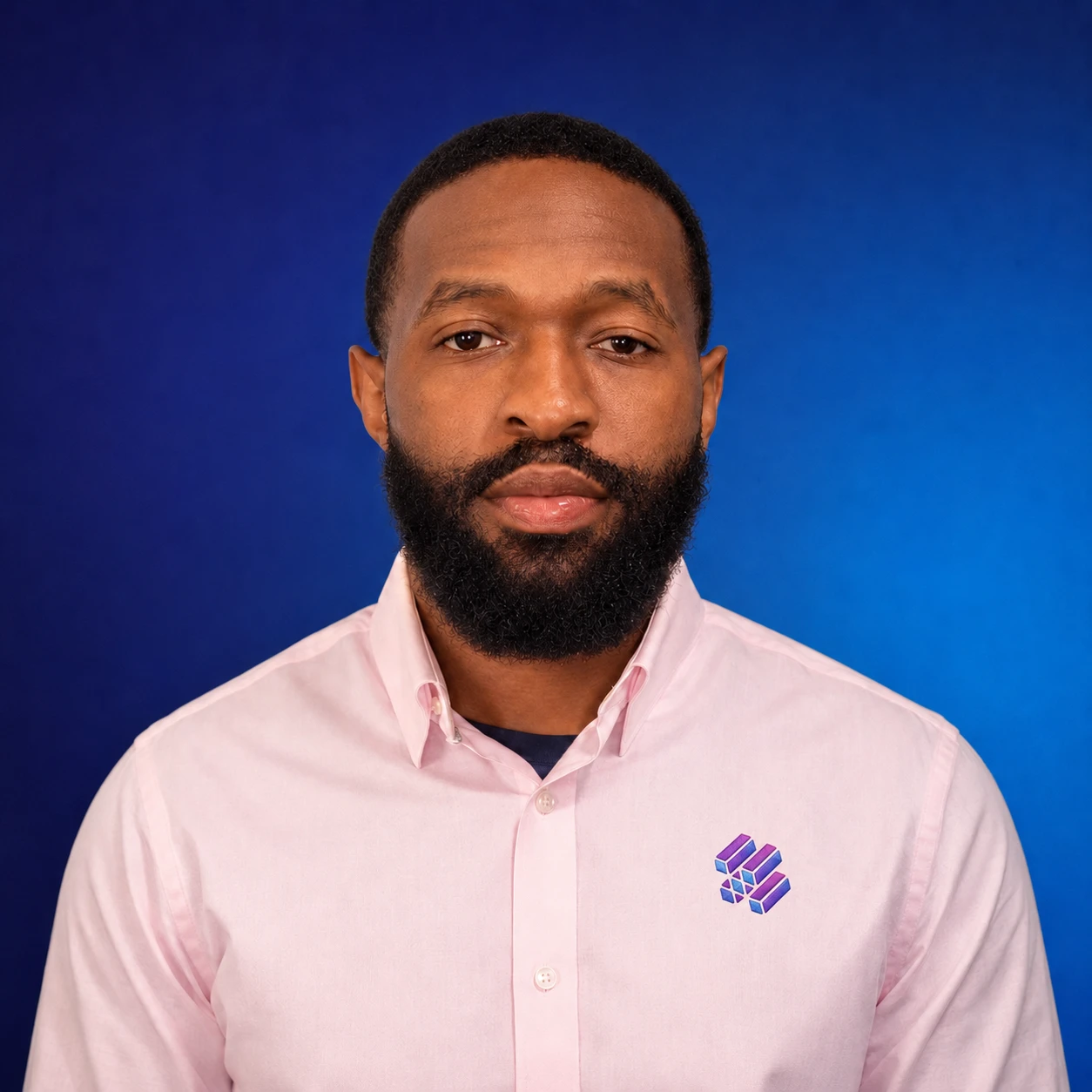
AI Business Broker | Helping AI SaaS founders secure confidential exits | 2.16M in AUM
Comments (0)
Be the first to share your thoughts.


