TL;DR:
- Marketplace auctions for AI micro-SaaS businesses face trust issues due to scam concerns and unreliable listings. They operate similarly to real estate auctions, with mechanics like reserve prices, proxy bidding, and escrow, offering faster and more transparent options than traditional brokers. Despite some noise, curated platforms streamline sales, making auctions an effective choice for quick, secure exits or acquisitions at smaller scales.
Marketplace auctions for AI micro-SaaS businesses have a reputation problem. Ask ten founders how they feel about buying or selling through an auction platform, and you’ll get a split between excitement and deep skepticism. Some have heard about scammy listings, unreliable bidders, and messy post-auction negotiations that drag on for months. Others have seen peers exit a small AI side project in under three weeks and walk away with a clean deal. The difference almost always comes down to understanding how these auctions actually work, which mechanics protect you, and what separates a well-run marketplace from a noisy, low-quality one.

Key Takeaways
| Point | Details |
|---|---|
| Auction platforms are fast | Marketplace auctions close deals quickly compared to broker-managed sales. |
| Due diligence is vital | Always vet both the platform and buyers to avoid scams or low-quality listings. |
| Escrow protects sellers | Escrow arrangements ensure funds are held until liabilities are settled. |
| Direct negotiation possible | If the reserve price isn’t met, sellers can negotiate directly with bidders for flexible outcomes. |
| Asset sales limit liability | Selling just the business assets instead of the whole entity helps minimize post-sale risk. |
How marketplace auctions work for AI SaaS businesses
With the confusion addressed, let’s clarify how marketplace auctions for AI SaaS really operate.
At their core, marketplace auctions for digital businesses work a lot like real estate auctions, but with a few important differences. A seller lists their AI micro-SaaS business on a platform, sets a valuation and a reserve price (the minimum they’ll accept), and opens the listing to qualified buyers. Interested buyers can inspect financials, ask questions, and submit bids over a defined auction window, typically seven to thirty days.
Here’s what a standard auction listing covers:
- Business overview: revenue model, MRR or ARR, customer count, and key technology stack
- Traffic and growth data: unique visitors, conversion rates, churn rate
- Financial documentation: bank statements, Stripe or payment processor exports, P&L summaries
- Asset inventory: codebase, domain, customer list, API integrations, brand assets
- Seller notes: honest context about growth opportunities and known challenges
One mechanic that surprises first-time buyers is proxy bidding. Rather than forcing you to monitor an auction in real time and submit manual bids, proxy bidding prevents sniping and lets the system automatically place bids up to your stated maximum. This keeps things fair and removes the frantic last-second bidding wars that plague less sophisticated platforms. Sellers can also engage directly with bidders during the auction window, answering questions, clarifying documentation, and even screening buyers for seriousness before approving their participation.
Pro Tip: Before bidding on any AI SaaS listing, request at least three months of payment processor exports. Screenshots are easy to fake. Raw transaction data is not.

Escrow plays a critical role at every stage. Once a bid is accepted, funds move into escrow rather than directly to the seller. This protects buyers during asset transfer and gives sellers confidence that the buyer has real capital. You can read more about deal structures and protections on the acquisition blog.
Comparing auction vs. broker and negotiation methods
Understanding the auction model, it’s crucial to contrast it with other sale strategies to reveal strengths and weaknesses.
There are three main paths to buy or sell an AI SaaS business: using a traditional broker, running a marketplace auction, or going direct through private negotiation. Each comes with a distinct tradeoff between speed, cost, control, and protection.
“Flippa is known for noise and low-quality listings alongside genuine gems. Using escrow and thorough due diligence is non-negotiable. Brokers charge 10 to 15% and deals take 6 to 12 months. Cleaner platforms like UnicornMarket and Acquire.com offer faster verified transactions but with smaller buyer pools. Some founders prefer direct negotiation for maximum flexibility.”
Here’s a side-by-side breakdown:
| Method | Average timeline | Typical fee | Buyer quality | Risk level |
|---|---|---|---|---|
| Traditional broker | 6 to 12 months | 10 to 15% | High (screened) | Low |
| Marketplace auction | 14 to 90 days | 5 to 10% | Mixed | Medium |
| Direct negotiation | Variable | 0% | Variable | High |
| Curated AI marketplace | Under 14 days | 10% flat | High (vetted) | Low |
The broker path is reliable but slow and expensive. For a $200,000 AI SaaS deal, a 15% broker fee means $30,000 gone before taxes. More frustrating is the timeline. Six to twelve months of back-and-forth, NDAs, and slow due diligence is not what most indie founders want when they’re ready to exit a side project and move on.
Here’s why auctions tend to win for micro-SaaS:
- Speed: Competitive bidding compresses what could be a six-month negotiation into weeks
- Price discovery: Multiple bidders set a natural market price, often higher than a solo negotiation would yield
- Transparency: Public bid histories and platform-enforced rules reduce shady offers
- Buyer pool: Platforms with thousands of registered buyers bring more eyes than any founder could attract alone
The tradeoff is listing quality. General platforms like Flippa carry a lot of low-quality noise alongside legitimate deals. If you’re a buyer, plan to evaluate dozens of listings before finding one worth pursuing. For sellers, this means your listing needs to stand out with clean documentation and honest numbers. You can review fees and pricing to understand how cost structures compare across platform types.
For founders who want faster sale timelines without paying broker-level fees, curated AI-specific marketplaces are increasingly the smarter path.
Auction nuances: Reserve price, proxy bidding and post-auction negotiation
Now, let’s examine the critical auction mechanics that make the difference for micro-SaaS founders.
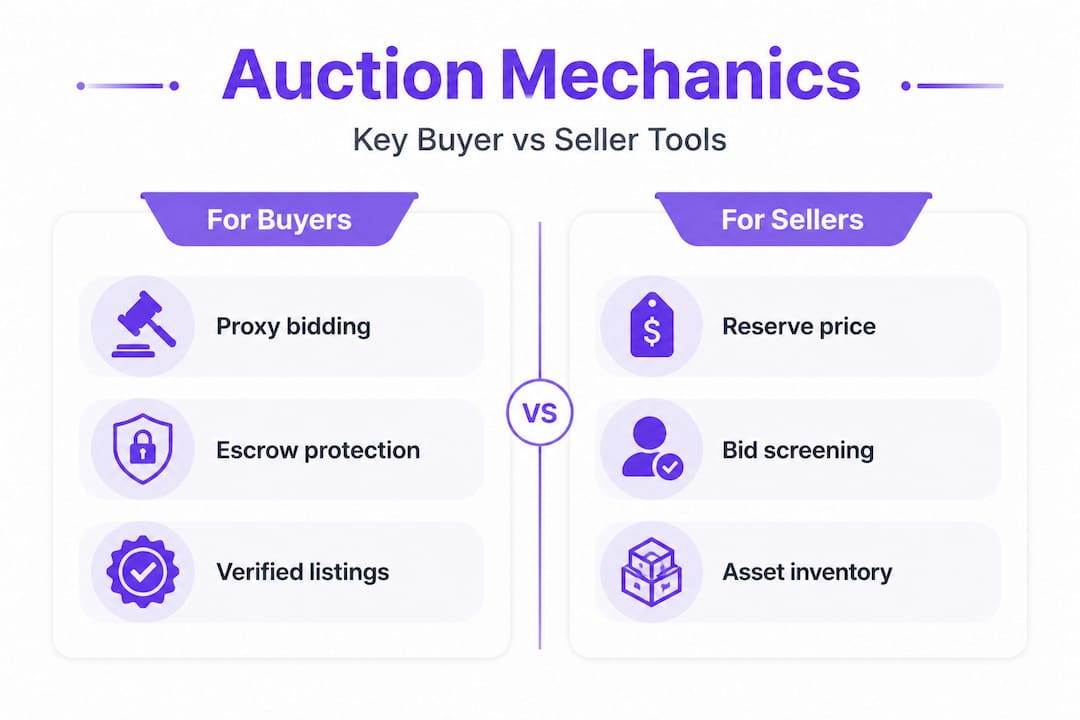
Most first-time sellers underestimate the reserve price. It is not just a floor for negotiations. It signals to buyers how serious you are about your valuation and directly shapes the quality of bids you attract. Set it too high and qualified buyers won’t engage. Set it too low and you risk leaving money on the table if bidding stalls.
Here’s a quick reference for common auction mechanics:
| Mechanic | What it does | Who it protects |
|---|---|---|
| Reserve price | Minimum acceptable sale price | Seller |
| Proxy bidding | Auto-bids up to buyer’s max | Buyer |
| Seller approval | Seller screens and approves bidders | Seller |
| Escrow hold | Funds held during asset transfer | Both parties |
| Post-auction negotiation | Direct talks if reserve not met | Both parties |
When bidding doesn’t reach the reserve, the listing doesn’t simply fail. According to Flippa’s auction model, the deal typically shifts to a “make offer” format where sellers engage directly with the highest bidders. This is often where the best deals actually happen, because both sides have already gone through the education phase and are genuinely interested.
Asset sale structure is another detail that catches founders off guard. Most platform transactions are structured as asset sales rather than equity or share transfers. This matters because asset sales limit liability for the buyer, who isn’t inheriting the seller’s historical tax obligations or undisclosed liabilities. Escrow periods typically run 6 to 18 months to cover potential post-sale claims, depending on the complexity of the business.
Pro Tip: If you’re selling, make sure your asset inventory list is complete and legally clean before the auction opens. Missing assets or disputed ownership discovered during escrow can collapse a deal at the worst possible moment.
Sellers should also understand that approving bidders before they can participate is a real lever. Screening for serious, qualified buyers reduces the chance of a fake bid driving up price expectations only to collapse during due diligence. Reviewing your platform’s NDA policy before listing is smart. And if you’re a buyer trying to find the right deal faster, the buyer matching quiz is worth your time.
Real-world tips for founders: Maximizing success in marketplace auctions
With mechanisms explained, here are practical tactics to make your auction experience safe, efficient, and successful.
Knowing how auctions work in theory and actually running or winning one are two different things. The founders who consistently succeed, whether buying or selling, share a few common habits.
For sellers:
- Prepare your data room early. Buyers do not trust sellers who produce documents slowly. Have your MRR charts, churn data, customer cohorts, codebase access, and domain ownership records ready before day one.
- Set a realistic reserve. Use a revenue multiple that reflects current market conditions. Most profitable AI micro-SaaS tools trade at 2x to 4x annual revenue. Overpricing kills momentum.
- Engage actively during the auction. Sellers who respond to buyer questions within hours see higher final sale prices than those who go silent after listing. Visibility and responsiveness signal credibility.
- Be ready for post-auction talks. Even if bidding goes well, buyers often want a transition period, earnout clause, or seller support commitment. Build flexibility into your expectations.
For buyers:
- Verify revenue independently. Ask for read-only access to the seller’s payment processor or analytics tool. Don’t rely on exported PDFs that could be edited.
- Evaluate the tech debt honestly. A vibe-coded MVP that generates $2,000 MRR might look great on paper but carry months of refactoring work. Factor that into your offer.
- Use escrow without exception. Transferring money outside escrow because a seller seems trustworthy is how people lose five figures fast. Platforms with structured escrow exist precisely for this protection.
- Run a post-acquisition integration plan. Know how you’re going to migrate customers, maintain uptime, and handle support tickets before you close the deal, not after.
Pro Tip: During an active auction, send a direct message to the seller showing that you’ve reviewed the documentation and have specific follow-up questions. This signals seriousness and often prompts sellers to favor your bid even when it isn’t the highest, because certainty of close matters more than top-line offer price.
These habits separate buyers and sellers who close clean deals from those who get stuck in post-auction limbo.
The uncomfortable truth: Marketplace auctions aren’t perfect, but they beat slow traditional sales
Having explored the practical tips, it’s time to reflect on the big picture and why auctions are reshaping digital business deals.
Here’s the take that most articles won’t say plainly: marketplace auctions are messy. General platforms have real problems with fake listings, tire-kicker buyers, and sellers who over-inflate their metrics. That is simply true. But the alternative, spending six to twelve months with a broker who charges 10 to 15% of your deal value and manages everything at their pace, is worse for most indie founders.
The broker model was built for institutional deals. It works well when you’re selling a $5 million SaaS with complex legal structures, a sales team to manage, and months of runway to wait for the right strategic buyer. It is a poor fit for a solo founder trying to exit a profitable AI writing tool that generates $4,000 a month. The math doesn’t work. The timeline doesn’t work. And the control you give up is not worth it at that scale.
Contrasting views on platforms like Flippa versus curated options show that the smart move is not to avoid auctions entirely but to choose the right platform for your deal size. A curated, AI-specific marketplace with screened buyers and a structured pipeline eliminates most of the noise that makes general auction platforms frustrating. Due diligence and escrow remain non-negotiable regardless of platform, but a focused marketplace filters out bad actors before they reach your listing.
The founders who struggle with auctions are usually the ones who treat them like a passive listing process. Post your numbers, wait for bids, collect money. That’s not how it works. Auctions reward active sellers and prepared buyers. Engage, screen, negotiate, and document everything. Do that on the right platform and you’ll close faster and cleaner than any broker would have managed. For additional context on how the broader auction industry standards are evolving, it’s worth following the conversation.
Ready to buy or sell your AI SaaS micro-business?
If you’ve been sitting on a revenue-generating AI side project without a clear exit plan, or if you’re actively looking to acquire a vetted AI tool without navigating broker fees and six-month timelines, there’s a cleaner path available.
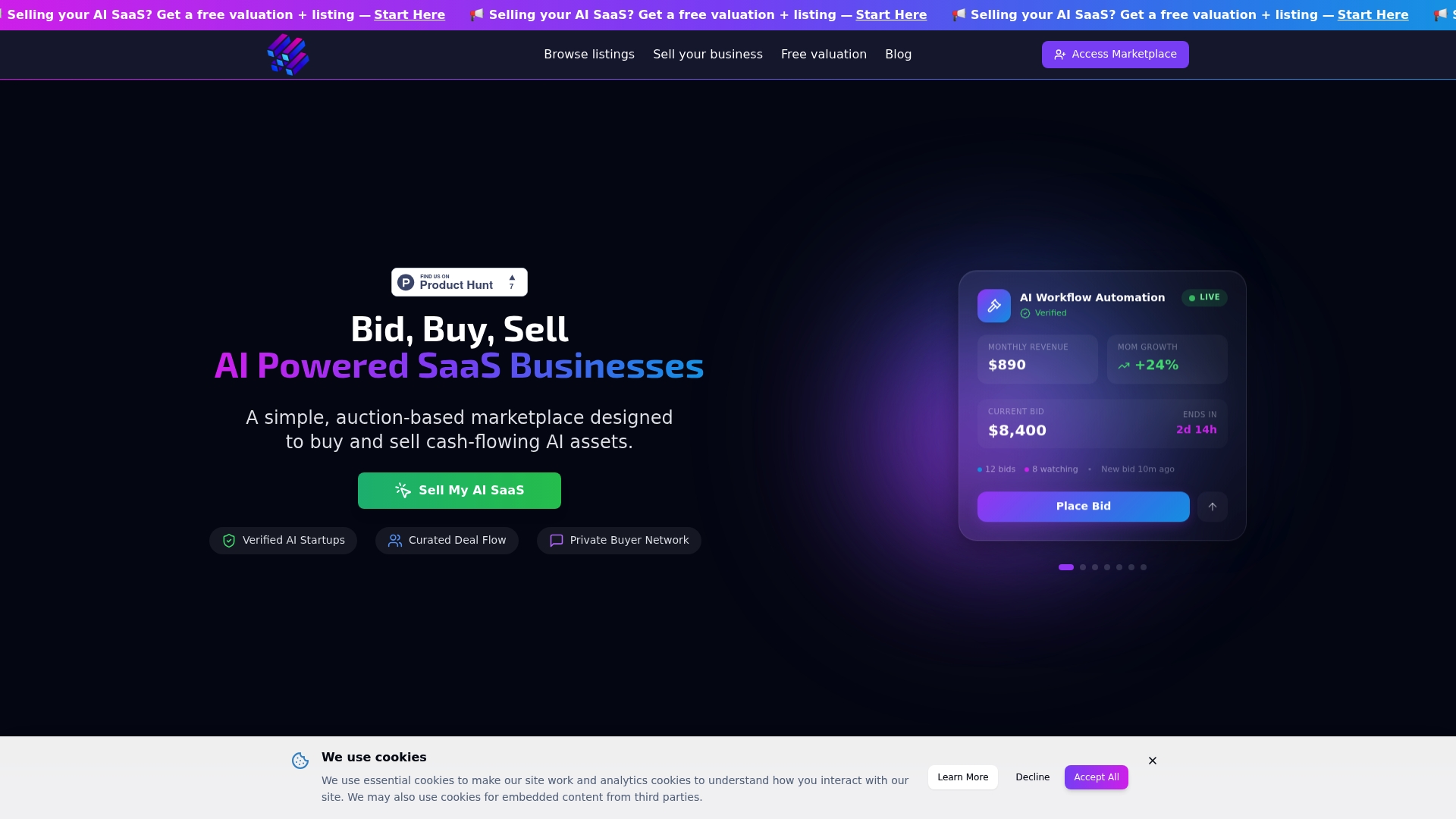
AIExchange.club is a curated M&A marketplace built specifically for AI-powered micro-SaaS businesses. Every listing is revenue-generating, every deal runs through a 6-stage facilitated pipeline (Kickoff through Closing), and funds are secured via Escrow.com. There are no listing fees and no monthly subscriptions. Just a flat 10% success fee when a deal closes. Most transactions close in under 14 days. Whether you want to list your business at the auction submission page, find your ideal acquisition through the buyer matching quiz, or just review fees and pricing details, the next step is straightforward.
Frequently asked questions
What is a reserve price in marketplace auctions?
A reserve price is the minimum amount a seller will accept for their business. If bidding doesn’t reach it, the listing shifts to negotiation where the seller can engage directly with interested buyers.
Are auctions safer than direct negotiation for selling AI SaaS?
Auctions provide more visibility and built-in escrow protections, but due diligence remains essential to filter out low-quality listings and unreliable bidders on general platforms.
How long does it take to sell an AI micro-SaaS via auction?
Curated platforms like UnicornMarket average around 30 days, compared to the 6 to 12 months typical with broker-managed sales.
What happens if an auction ends without a winning bid?
If the reserve price isn’t met, the listing typically moves to a “make offer” process where the seller negotiates directly with the most qualified bidders from the auction.
Recommended
- Buy & Sell AI SaaS Businesses | AIExchange.club
- AI SaaS Acquisition Blog | AI Exchange Club
- Buy & Sell AI SaaS Businesses | AIExchange.club
- Buy & Sell AI SaaS Businesses | AIExchange.club
Ready to make a move?
Whether you're looking to acquire your next AI SaaS or list your business for the right buyer, AI Exchange Club connects vetted buyers and sellers with a flat 10% success fee.

Comments (0)
Be the first to share your thoughts.


