
A fast M&A close means 30 to 60 days from signed LOI to closing. Law firm guidance puts the target at about 45 days, with 60 days typical when nothing goes wrong. A small AI SaaS asset with clean books and no regulatory filing can go faster, because the steps that eat months in larger deals (shareholder votes, antitrust waiting periods, multi-party consents) mostly do not apply. This guide breaks the LOI-to-closing path into stages, shows where days are won or lost, and explains how we run deals on AI Exchange Club, a marketplace for AI SaaS businesses.

TL;DR
- Orrick generally targets 30 to 60 days from LOI to closing, with 45 days a good goal and about 60 typical absent regulatory approvals or other delays.
- Speed is decided before the LOI: price, structure, escrow terms and exclusivity settled early shorten the drafting phase.
- Small AI SaaS deals usually sit far below the federal HSR filing threshold, so no government waiting period applies.
- On AI Exchange Club, listing is free, the fee is a flat 10% with no monthly fees, and deals close through escrow with standardized contracts. Our target close time is under 14 days.
What “fast” means in an M&A timeline
Timelines depend on deal size. A public-company merger or a large private-equity buyout carries financing, lender sign-off and regulatory review. A micro-SaaS sale often involves one seller, one buyer, a domain, a code repository, a payment processor and a handful of vendor accounts.
So “fast” has two meanings. Against the broader market, 60 days from LOI to close is quick. Against what a small digital asset needs, the practical floor is much lower, because the work is mostly verification and transfer, not approvals.
Here is how the stages compare.
| Deal type | Typical LOI-to-close pattern | What drives the length |
|---|---|---|
| Larger private company sale | 30 to 60 days targeted, often about 60 | Confirmatory diligence, third-party consents, purchase agreement |
| Deal needing HSR clearance | Longer, with a statutory waiting period | Government review on top of everything else |
| Small AI SaaS asset sale | Weeks | Revenue and code verification, asset transfer, escrow release |
The first row is from Orrick’s sale-process timeline. The other rows are our own description of how small asset deals differ, not a published statistic.
The stages from LOI to closing
Every acquisition runs the same sequence. What changes is how long each step takes. Orrick describes the legal path as confirmatory diligence, signing a purchase agreement, collecting required third-party consents and approvals, satisfying any government waiting periods, then signing final documents and wiring funds.

1. Kickoff and LOI
The LOI sets price, structure and the rules of the road. It is usually non-binding on price but binding on confidentiality and exclusivity. Everything left vague here becomes a negotiation later, so this is where a fast deal is made.
2. Due diligence
This is the longest stage in most deals and the one buyers should not compress carelessly. For a SaaS business, diligence covers revenue (Stripe or processor exports reconciled to the books), churn and cohort behavior, customer contracts, code ownership, third-party licenses and API dependencies. For AI products, add model provider terms, prompt and data rights, and cost-per-request economics. We cover the details in our guides on AI SaaS due diligence and technical due diligence, and the general version in our due diligence checklist.
3. Definitive agreement
The purchase agreement turns the LOI into binding terms: reps and warranties, indemnity, escrow or holdback, purchase-price adjustments and closing conditions. For small deals, an asset purchase agreement on a standard template removes most of the back-and-forth. Whether you buy assets or stock changes liability and tax, which we explain in asset sale vs stock sale.
4. Conditions, consents and funding
This covers anything that must happen before money moves: third-party consents, regulatory filings if any, and buyer financing. Orrick lists third-party consents, approvals, government waiting periods and other conditions among the things that can delay closing.
5. Escrow and closing
Funds go to a neutral escrow agent, assets transfer, the buyer confirms receipt, and funds release. A checklist prevents the late scramble over missed credentials and forgotten accounts. Ours is in the M&A closing checklist for SaaS deals.
What slows a deal down
Most delays are avoidable. They fall into five groups.
- Open price and structure points. Mintz notes that settling these at the LOI stage can expedite drafting. Unresolved earnout or indemnity mechanics reappear as redlines.
- Slow document production. A seller who assembles financials and contracts only after the LOI loses weeks. Foley Hoag’s sale-preparation guidance recommends having current financials and contracts ready before approaching a buyer.
- Financing. The Association of Corporate Counsel reported that U.S. LOI exclusivity periods stretched from 30 to 45 days to commonly 90 days in 2023 because financing got harder to obtain. A buyer who arrives with cash, or proof of funds, removes this risk.
- Consents. If a key customer contract or vendor agreement needs approval to transfer, closing waits on someone who has no reason to hurry.
- Regulatory review. Some deals require a federal premerger filing. The FTC says the minimum size-of-transaction threshold for 2026 is $133.9 million, effective February 17, 2026. Most AI micro-SaaS deals fall well under that, which is one reason they can move faster than mid-market deals.
Process type matters too. An Analysis Group study found negotiated transactions were generally faster than auctions, saving about two months on average in total process time. That study covers larger transactions, so treat it as direction, not a guarantee for a small asset. If you want to understand how competitive bidding affects value, read our piece on AI SaaS auction strategies.
How sellers prepare to close fast
The fastest closings are decided months earlier. A seller who has the paperwork ready converts a buyer’s enthusiasm into a signed deal before it cools.
- Reconcile revenue. Match processor payouts to bank deposits and your reported monthly recurring revenue. Buyers check this first.
- Build the data room before listing. Financials, contracts, code access plan, vendor list and credentials inventory in one place. See our data room setup guide.
- Decide your terms. Know your floor on price, whether you accept an earnout, and how much of the price you will leave in escrow or holdback.
- Keep exclusivity short. Mintz reports exclusivity commonly runs 30 to 45 days, and Orrick advises sellers to push toward 30. A tight window pressures both sides to finish.
- Stage sensitive disclosure. Foley Hoag recommends counsel-reviewed confidentiality terms and releasing commercially sensitive information in stages. Under NDA, you can still move quickly without exposing your customer list early.
- Document your dependencies. List every API key, model provider account, domain registrar, and third-party service so the transfer day has no surprises.
Our 12-month sale preparation checklist and SaaS exit strategy guide cover longer-horizon work.
How buyers keep diligence fast without skipping it
Speed for a buyer means focused diligence, not shallow diligence. Define the five or six questions that would change your price or kill the deal, and answer those first.
- Revenue quality: Is revenue recurring, how concentrated is it, and what does churn look like by cohort?
- Code and IP: Does the seller own the code outright, and are open-source licenses compatible with commercial use?
- AI dependency: Which model providers does the product rely on, what happens if pricing or terms change, and are inference costs stable against revenue?
- Data rights: Can customer data and any training or prompt data legally transfer to you?
- Operations: Who handles support, billing disputes and infrastructure today, and what do they know that is not written down?
Order matters. Check revenue first, because a mismatch there ends the conversation in a day. Code review comes next, then contracts and operational handover. Parallel workstreams beat sequential ones: legal review of the APA can run while technical review is underway.
Our perspective: speed comes from structure
We built AI Exchange Club for AI SaaS businesses, and the lesson we keep coming back to is that deals do not stall because people are slow. They stall because nobody agreed what happens next.
That is why every deal on our platform runs through a six-stage pipeline: Kickoff Call, LOI, Due Diligence, APA/ATA, Escrow and Closing. Each stage has a defined output, so both sides always know what is outstanding. Contracts are standardized and signed in-platform through DocuSeal, which removes the week many small deals lose to drafting from scratch. Funds are held by Escrow.com, so the seller knows the money exists and the buyer knows it is not released until conditions are met.

We target a close in under 14 days. That is a target, not a promise: a deal closes at the pace of its slowest open item, and a messy set of books or an unresolved dependency will extend any timeline. What we can do is make sure those problems surface in diligence and not at the closing table.
We also think sellers should not pay to find out whether a business will sell. Listing is free, and the fee is a flat 10% paid only when a deal closes, with no monthly fees.
— Phillip
Running a fast deal on AI Exchange Club
If you own an AI SaaS business with revenue, you can list it for free and see who is interested. If you are buying, you can browse vetted listings, submit an offer or join a live auction in the AI SaaS marketplace.
The fee is a flat 10% on closed deals with no monthly fees. Deals close through escrow with standardized contracts, and listings are protected by NDA. Buyers who want full marketplace access can choose a membership at $49 per month or $399 per year. Sellers who want hands-on help can ask about our boutique AI M&A advisory, and you can see current plans on the pricing page.
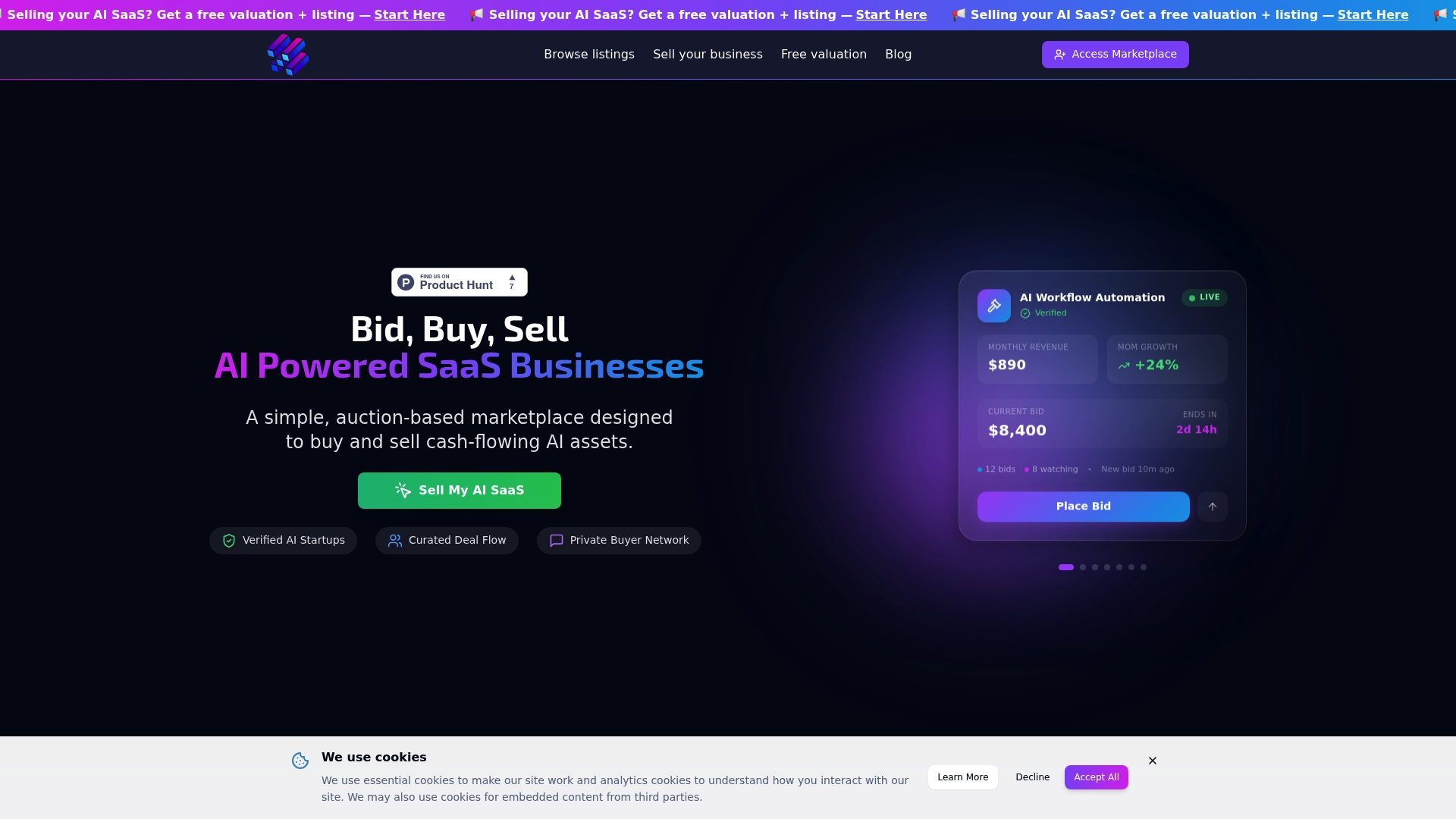
Ready to sell? Start your free listing. For the full sequence from first call to close, see our business acquisition steps.
FAQ
How long does it take to go from LOI to closing?
Law firm guidance puts the usual target at 30 to 60 days, with about 45 days a good goal and 60 days typical when nothing delays the deal. Complex deals with regulatory approvals run longer. Small AI SaaS asset sales can be shorter because fewer approvals apply.
Can a SaaS acquisition close in under 30 days?
Yes, when the seller has records ready, the buyer has funds, and the agreement is on a standard template. Both sides still need time for revenue and code verification, so expect the schedule to depend on how clean the business is. Our target at AI Exchange Club is under 14 days.
Does a small SaaS deal need government approval?
Usually not. The federal HSR filing applies above a minimum size-of-transaction threshold, which the FTC set at $133.9 million for 2026. Deals below it are not reportable under that rule, though other contract-level consents can still apply. Ask a transactional attorney about your specific deal.
What most often delays closing?
Unresolved price and structure terms, slow document production, buyer financing and required third-party consents. Most of these can be fixed before the LOI is signed. Preparing a data room and agreeing core terms early is the cheapest way to save time.
How long should LOI exclusivity last?
Mintz reports that 30 to 45 days has been the common range, while the ACC noted periods stretching toward 90 days in 2023 when financing was difficult. Sellers generally want it shorter. A seller-side attorney can tell you what is reasonable for your buyer’s financing situation.
Sources
- What’s the Timeline for a Sale Process? (Orrick)
- Seller Considerations When Negotiating a Letter of Intent (Mintz)
- M&A: Preparing for a Sale (Foley Hoag)
- Impacts on the 2023 M&A and Deals Market (Association of Corporate Counsel)
- Expediting M&A Deal Processes Via Negotiations vs. Auctions (Analysis Group)
- New HSR thresholds and filing fees for 2026 (FTC)
Recommended
AI SaaS businesses for sale right now

AI Business Broker | Helping AI SaaS founders secure confidential exits | 2.16M in AUM
Comments (0)
Be the first to share your thoughts.


